Tuesday, July 09, 2013


Wednesday, May 04, 2011
My publications
The e-Skills Manifesto (2010)
Author: McCormack, A.; Editor: Joyce, A.
http://files.eun.org/eskillsweek/manifesto/e-skills_manifesto.pdf
European Commission DG ENTR, European e-Skills Association
Inspire: challenging the lack of interest in physics among students
A. Gras-Velazquez, A. Joyce, J. Snellman, M. Kirsch, Y. Beernaert, M. Hofer, E. Zistler, M. Obermuller, E. Kulnigg, E Kurilovas, S. Serikoviene, M. Muller & R. Ploger (2010)
Il Nuovo Cimento C - Colloquia on physics, Italian Society of Physics
DOI 10/1393/ncc/i2010-10617-x
Gras-Velazquez, A. & Joyce, A. (2008) Inspire Deliverable D 2.3 Quality criteria and analysis of Learning Obejcts in Maths, Science and Tehcnology (Confidential)
European Schoolnet: enabling school networking (2009)
European Journal of Education
Scimeca, S., Dumitru, P., Durando, M., Gilleran, A., Joyce, A. & Vuorikarii, R.
http://onlinelibrary.wiley.com/doi/10.1111/j.1465-3435.2009.01407.x/abstract
Inspire: motivating students for maths, science and technology; Insight report (2009) available at http://inspire.eun.org/images/2/22/Inspire_Report_final-insight.report.pdf
A. Gras-Velazquez, A. Joyce, J. Snellman, M. Kirsch, Y. Beernaert, M. Hofer, E. Zistler, M. Obermuller, E. Kulnigg, E Kurilovas, S. Serikoviene, M. Muller & R. Ploger
Kearney, C. Gras-Velazquez, A. & Joyce, A. (2009) Stimulating teachers' and students' engagement in science education through the use of ICT-based tools and involvement in inquiry-based European projects. Stella handbook on innovative practices, available from http://stella-science.eu
"Experiencias de enseñanza de la química con el apoyo de las TIC" (Experiences in the teaching of Chemistry with the aid of ICT)
Erika P. Daza Pérez, Albert Gras-Marti, Àgueda Gras-Velázquez, Nathaly Guerrero Guevara, Ana Gurrola Togasi, Alexa Joyce, Elizabeth Mora-Torres, Yamile Pedraza, Enric Ripoll, Julio Santos
Revista Educación Química en Línea, ISSN 1870-8404, Vol XX, N 3, 320-329, 2009
http://educacionquimica.info/
“Women and ICT. Why are girls still not attracted to ICT studies and careers?” by Agueda Gras-Velazquez, Alexa Joyce and Maïté Debry:
http://blog.eun.org/insightblog/upload/Women_and_ICT_FINAL.pdf
Cisco and European Schoolnet white paper
“Women in IT. The European situation and the role of public-private partnerships in promoting greater participation of young women in technology” by M. Durando, P. Wastiau and A. Joyce:
http://resources.eun.org/insight/Science%20girls5.pdf
Giving Knowledge for Free: The Emergence of Open Educational Resources (2007 OECD)
Edited several chapters (non credited as external consultant)
http://www.oecdbookshop.org/oecd/display.asp?K=5L4S6TNG3F9X&lang=EN&sort=sort_date%2Fd&stem=true&sf1=Title&st1=open+educational+resources&sf3=SubjectCode&st4=not+E4+or+E5+or+P5&sf4=SubVersionCode&ds=open+educational+resources%3B+All+Subjects%3B+&m=3&dc=3&plang=en
Open Educational Resources: Conversations in Cyberspace (UNESCO 20The e-Skills Manifesto (2010)
Author: McCormack, A.; Editor: Joyce, A.
http://files.eun.org/eskillsweek/manifesto/e-skills_manifesto.pdf
European Commission DG ENTR, European e-Skills Association
Inspire: challenging the lack of interest in physics among students
A. Gras-Velazquez, A. Joyce, J. Snellman, M. Kirsch, Y. Beernaert, M. Hofer, E. Zistler, M. Obermuller, E. Kulnigg, E Kurilovas, S. Serikoviene, M. Muller & R. Ploger (2010)
Il Nuovo Cimento C - Colloquia on physics, Italian Society of Physics
DOI 10/1393/ncc/i2010-10617-x
Gras-Velazquez, A. & Joyce, A. (2008) Inspire Deliverable D 2.3 Quality criteria and analysis of Learning Obejcts in Maths, Science and Tehcnology (Confidential)
Inspire: motivating students for maths, science and technology; Insight report (2009) available at http://inspire.eun.org/images/2/22/Inspire_Report_final-insight.report.pdf
A. Gras-Velazquez, A. Joyce, J. Snellman, M. Kirsch, Y. Beernaert, M. Hofer, E. Zistler, M. Obermuller, E. Kulnigg, E Kurilovas, S. Serikoviene, M. Muller & R. Ploger
Kearney, C. Gras-Velazquez, A. & Joyce, A. (2009) Stimulating teachers' and students' engagement in science education through the use of ICT-based tools and involvement in inquiry-based European projects. Stella handbook on innovative practices, available from http://stella-science.eu
"Experiencias de enseñanza de la química con el apoyo de las TIC" (Experiences in the teaching of Chemistry with the aid of ICT)
Erika P. Daza Pérez, Albert Gras-Marti, Àgueda Gras-Velázquez, Nathaly Guerrero Guevara, Ana Gurrola Togasi, Alexa Joyce, Elizabeth Mora-Torres, Yamile Pedraza, Enric Ripoll, Julio Santos
Revista Educación Química en Línea, ISSN 1870-8404, Vol XX, N 3, 320-329, 2009
http://educacionquimica.info/
“Women and ICT. Why are girls still not attracted to ICT studies and careers?” by Agueda Gras-Velazquez, Alexa Joyce and Maïté Debry:
http://blog.eun.org/insightblog/upload/Women_and_ICT_FINAL.pdf
Cisco and European Schoolnet white paper
“Women in IT. The European situation and the role of public-private partnerships in promoting greater participation of young women in technology” by M. Durando, P. Wastiau and A. Joyce:
http://resources.eun.org/insight/Science%20girls5.pdf
Giving Knowledge for Free: The Emergence of Open Educational Resources (2007 OECD)
Edited several chapters (non credited as external consultant)
http://www.oecdbookshop.org/oecd/display.asp?K=5L4S6TNG3F9X&lang=EN&sort=sort_date%2Fd&stem=true&sf1=Title&st1=open+educational+resources&sf3=SubjectCode&st4=not+E4+or+E5+or+P5&sf4=SubVersionCode&ds=open+educational+resources%3B+All+Subjects%3B+&m=3&dc=3&plang=en
Open Educational Resources: Conversations in Cyberspace (UNESCO 2007)
Section 3: Hylen, J. & Joyce, A.
http://oerwiki.iiep.unesco.org/index.php/Open_Educational_Resources:_Conversations_in_Cyberspace
OECD study of OER: forum report (UNESCO 2006)
Joyce, A.
http://oerwiki.iiep.unesco.org/images/e/ea/Oer_forum_report.pdf
"Initiating and managing Schoolnets: lessons learned" UNESCO (2006)
- Coordinated publication and re-wrote texts
http://www.unescobkk.org/education/ict/online-resources/e-library/elibrary-themes/teaching-and-learning/initiating-and-managing-schoolnets-lessons-learned-vol-3/07)
Section 3: Hylen, J. & Joyce, A.
http://oerwiki.iiep.unesco.org/index.php/Open_Educational_Resources:_Conversations_in_Cyberspace
OECD study of OER: forum report (UNESCO 2006)
Joyce, A.
http://oerwiki.iiep.unesco.org/images/e/ea/Oer_forum_report.pdf
"Initiating and managing Schoolnets: lessons learned" UNESCO (2006)
- Coordinated publication and re-wrote texts
http://www.unescobkk.org/education/ict/online-resources/e-library/elibrary-themes/teaching-and-learning/initiating-and-managing-schoolnets-lessons-learned-vol-3/
Author: McCormack, A.; Editor: Joyce, A.
http://files.eun.org/eskillsweek/manifesto/e-skills_manifesto.pdf
European Commission DG ENTR, European e-Skills Association
Inspire: challenging the lack of interest in physics among students
A. Gras-Velazquez, A. Joyce, J. Snellman, M. Kirsch, Y. Beernaert, M. Hofer, E. Zistler, M. Obermuller, E. Kulnigg, E Kurilovas, S. Serikoviene, M. Muller & R. Ploger (2010)
Il Nuovo Cimento C - Colloquia on physics, Italian Society of Physics
DOI 10/1393/ncc/i2010-10617-x
Gras-Velazquez, A. & Joyce, A. (2008) Inspire Deliverable D 2.3 Quality criteria and analysis of Learning Obejcts in Maths, Science and Tehcnology (Confidential)
European Schoolnet: enabling school networking (2009)
European Journal of Education
Scimeca, S., Dumitru, P., Durando, M., Gilleran, A., Joyce, A. & Vuorikarii, R.
http://onlinelibrary.wiley.com/doi/10.1111/j.1465-3435.2009.01407.x/abstract
Inspire: motivating students for maths, science and technology; Insight report (2009) available at http://inspire.eun.org/images/2/22/Inspire_Report_final-insight.report.pdf
A. Gras-Velazquez, A. Joyce, J. Snellman, M. Kirsch, Y. Beernaert, M. Hofer, E. Zistler, M. Obermuller, E. Kulnigg, E Kurilovas, S. Serikoviene, M. Muller & R. Ploger
Kearney, C. Gras-Velazquez, A. & Joyce, A. (2009) Stimulating teachers' and students' engagement in science education through the use of ICT-based tools and involvement in inquiry-based European projects. Stella handbook on innovative practices, available from http://stella-science.eu
"Experiencias de enseñanza de la química con el apoyo de las TIC" (Experiences in the teaching of Chemistry with the aid of ICT)
Erika P. Daza Pérez, Albert Gras-Marti, Àgueda Gras-Velázquez, Nathaly Guerrero Guevara, Ana Gurrola Togasi, Alexa Joyce, Elizabeth Mora-Torres, Yamile Pedraza, Enric Ripoll, Julio Santos
Revista Educación Química en Línea, ISSN 1870-8404, Vol XX, N 3, 320-329, 2009
http://educacionquimica.info/
“Women and ICT. Why are girls still not attracted to ICT studies and careers?” by Agueda Gras-Velazquez, Alexa Joyce and Maïté Debry:
http://blog.eun.org/insightblog/upload/Women_and_ICT_FINAL.pdf
Cisco and European Schoolnet white paper
“Women in IT. The European situation and the role of public-private partnerships in promoting greater participation of young women in technology” by M. Durando, P. Wastiau and A. Joyce:
http://resources.eun.org/insight/Science%20girls5.pdf
Giving Knowledge for Free: The Emergence of Open Educational Resources (2007 OECD)
Edited several chapters (non credited as external consultant)
http://www.oecdbookshop.org/oecd/display.asp?K=5L4S6TNG3F9X&lang=EN&sort=sort_date%2Fd&stem=true&sf1=Title&st1=open+educational+resources&sf3=SubjectCode&st4=not+E4+or+E5+or+P5&sf4=SubVersionCode&ds=open+educational+resources%3B+All+Subjects%3B+&m=3&dc=3&plang=en
Open Educational Resources: Conversations in Cyberspace (UNESCO 20The e-Skills Manifesto (2010)
Author: McCormack, A.; Editor: Joyce, A.
http://files.eun.org/eskillsweek/manifesto/e-skills_manifesto.pdf
European Commission DG ENTR, European e-Skills Association
Inspire: challenging the lack of interest in physics among students
A. Gras-Velazquez, A. Joyce, J. Snellman, M. Kirsch, Y. Beernaert, M. Hofer, E. Zistler, M. Obermuller, E. Kulnigg, E Kurilovas, S. Serikoviene, M. Muller & R. Ploger (2010)
Il Nuovo Cimento C - Colloquia on physics, Italian Society of Physics
DOI 10/1393/ncc/i2010-10617-x
Gras-Velazquez, A. & Joyce, A. (2008) Inspire Deliverable D 2.3 Quality criteria and analysis of Learning Obejcts in Maths, Science and Tehcnology (Confidential)
Inspire: motivating students for maths, science and technology; Insight report (2009) available at http://inspire.eun.org/images/2/22/Inspire_Report_final-insight.report.pdf
A. Gras-Velazquez, A. Joyce, J. Snellman, M. Kirsch, Y. Beernaert, M. Hofer, E. Zistler, M. Obermuller, E. Kulnigg, E Kurilovas, S. Serikoviene, M. Muller & R. Ploger
Kearney, C. Gras-Velazquez, A. & Joyce, A. (2009) Stimulating teachers' and students' engagement in science education through the use of ICT-based tools and involvement in inquiry-based European projects. Stella handbook on innovative practices, available from http://stella-science.eu
"Experiencias de enseñanza de la química con el apoyo de las TIC" (Experiences in the teaching of Chemistry with the aid of ICT)
Erika P. Daza Pérez, Albert Gras-Marti, Àgueda Gras-Velázquez, Nathaly Guerrero Guevara, Ana Gurrola Togasi, Alexa Joyce, Elizabeth Mora-Torres, Yamile Pedraza, Enric Ripoll, Julio Santos
Revista Educación Química en Línea, ISSN 1870-8404, Vol XX, N 3, 320-329, 2009
http://educacionquimica.info/
“Women and ICT. Why are girls still not attracted to ICT studies and careers?” by Agueda Gras-Velazquez, Alexa Joyce and Maïté Debry:
http://blog.eun.org/insightblog/upload/Women_and_ICT_FINAL.pdf
Cisco and European Schoolnet white paper
“Women in IT. The European situation and the role of public-private partnerships in promoting greater participation of young women in technology” by M. Durando, P. Wastiau and A. Joyce:
http://resources.eun.org/insight/Science%20girls5.pdf
Giving Knowledge for Free: The Emergence of Open Educational Resources (2007 OECD)
Edited several chapters (non credited as external consultant)
http://www.oecdbookshop.org/oecd/display.asp?K=5L4S6TNG3F9X&lang=EN&sort=sort_date%2Fd&stem=true&sf1=Title&st1=open+educational+resources&sf3=SubjectCode&st4=not+E4+or+E5+or+P5&sf4=SubVersionCode&ds=open+educational+resources%3B+All+Subjects%3B+&m=3&dc=3&plang=en
Open Educational Resources: Conversations in Cyberspace (UNESCO 2007)
Section 3: Hylen, J. & Joyce, A.
http://oerwiki.iiep.unesco.org/index.php/Open_Educational_Resources:_Conversations_in_Cyberspace
OECD study of OER: forum report (UNESCO 2006)
Joyce, A.
http://oerwiki.iiep.unesco.org/images/e/ea/Oer_forum_report.pdf
"Initiating and managing Schoolnets: lessons learned" UNESCO (2006)
- Coordinated publication and re-wrote texts
http://www.unescobkk.org/education/ict/online-resources/e-library/elibrary-themes/teaching-and-learning/initiating-and-managing-schoolnets-lessons-learned-vol-3/07)
Section 3: Hylen, J. & Joyce, A.
http://oerwiki.iiep.unesco.org/index.php/Open_Educational_Resources:_Conversations_in_Cyberspace
OECD study of OER: forum report (UNESCO 2006)
Joyce, A.
http://oerwiki.iiep.unesco.org/images/e/ea/Oer_forum_report.pdf
"Initiating and managing Schoolnets: lessons learned" UNESCO (2006)
- Coordinated publication and re-wrote texts
http://www.unescobkk.org/education/ict/online-resources/e-library/elibrary-themes/teaching-and-learning/initiating-and-managing-schoolnets-lessons-learned-vol-3/
Monday, March 22, 2010
Ada Lovelace Day back for 2010

It's the perfect day to tell a story about an innovative woman in science or tech, whether a famous person or someone you know! As Suw wrote:
"Women’s contributions often go unacknowledged, their innovations seldom mentioned, their faces rarely recognised. We want you to tell the world about these unsung heroines, whatever they do. It doesn’t matter how new or old your blog is, what gender you are, what language you blog in, or what you normally blog about – everyone is invited."
So join in!
Saturday, March 20, 2010
Deep ecology and monitoring tropical forests with technology
Jane Goodall is an amazing primatologist, and also UN Messenger for Peace. Here is an interview by OneWorldTV, spanning a range of inspiring topics. She talks about how local people can monitor forests with mobile phones combined with Google Earth through to her educational programmes, and the spiritual importance of experiencing forests.
Wednesday, March 17, 2010
French reform to science and tech curricula

- Science and technology subjects will be easier to combine with languages. In the past, only one language could be studied together with science. Now students can choose two - exactly what I wanted to do back when I was at secondary school...
- Science and tech will be organised in several sub-topics according to whether you go for 'science and industrial technology' (comprising technology innovation and eco-design; digital information systems; energy and sustainable development; building and architecture) or 'laboratory science and technology' (including biotechnology and applied physics and chemistry).
The curriculum looks really interesting and modern - however, where is biological and life science in this framework? It seems that it has been totally separated from the other sciences, which seems to be a mistake when sustainable development and eco-design relies on a fundamental understanding of these topics.
More information (in French)
Friday, March 12, 2010
Web roundup: my top picks
With e-Skills Week only just out of the way, I have little time to scan the blogosphere - but these caught my eye:
- New research on 1:1 computing indicates that students in such programmes outperform their peers. My colleague Riina Vuorikarii has just launched a new project with ACER to look at 1:1 computing in EU schools too, and has a great new website with technical support, learning resources and more.
- Skeptical video from Australian TV show 'Hungry Beast' about Google's expansion and involvement in many industries. I'm dependent on Google services online so it's an interesting reminder.
- Interview with researcher Ying-Ta Wu on how grid computing can fight dengue fever and enable international data sharing
- The annual Reporters without Borders report on web freedom highlights that even democratic countries like Australia and South Korea are now cracking down on online expression.
Monday, March 01, 2010
e-Skills Week: podcast interview

- Listen to the interview
- Get the full list of podcasts and videocasts
Friday, February 26, 2010
Socialnomics: the impact of social networks
As we get ready for e-Skills Week, Martha Lane Fox tweeted a link to this great video from Erik Qualman, the author of Socialnomics - an excellent book and blog on social media. It's from last year, but it summarises really well some of the key facts about social networks - not to mention it has a nice Fatboy Slim track to keep you interested while you watch! Not strictly education, but social media is totally pervasive in Europe nowadays so important for all of us.
Friday, February 19, 2010
What is nanotech? Stephen Fry explains!
For the Nanoyou project, our partners at the University of Cambridge Cavendish Lab have produced this fabulous video, narrated by Stephen Fry. Not only does it explain succintly what nanotech is, but it's all rounded off with a great soundtrack...
Thursday, February 18, 2010
eTwinning: explaining teacher cooperation in animation
We've been releasing a lot of clips recently at European Schoolnet, and one I'm especially pleased with is this one for eTwinning, done together with Dog Studio. The idea was to make a short clip that explained, with no words, what eTwinning is about. The team did a really great job.
Watch the clip, and see if you think it explains the project!
Visit the eTwinning website to know more and get involved in school cooperation projects
Watch the clip, and see if you think it explains the project!
Visit the eTwinning website to know more and get involved in school cooperation projects
e-Skills Week video clip: IT's your future!
The whole team is working really hard on the e-Skills Week campaign to raise awareness of IT careers, and have just released a promotional video clip to share around.
Visit the e-Skills website!
Visit the e-Skills website!
Wednesday, January 20, 2010
Best of the rest: fortnightly roundup

- Erik Duval on 'Future of interoperability: food for thought' - talking about standardisation of learning content
- Suw Charman Anderson on 'Social media and productivity' - what's the link between the two?
- 'The most ugly and useless infographic competition winners' from Information Aesthetics
- 'Life on the net is too short' by Harold Jarche
- Ina Fried on 'Marko, the 9-year-old systems engineer'
Addressing gender issues in technology
Recent research from IDC (PDF) indicates that within the next five years, 90% of jobs in Europe will require IT skills and there are not enough skilled people on the job market. At the same time, there are few women participating in IT-based careers - more involvement from them could improve the situation (see my previous post on the European Schoolnet/Cisco research on this topic).
I've recently joined the executive committee of the European Centre for Women and Technology, a Norway-based non-profit aiming to improve women's participation in the knowledge economy and the IT industry. ECWT organises numerous activities through its member companies and organisations across the EU, including:
I've recently joined the executive committee of the European Centre for Women and Technology, a Norway-based non-profit aiming to improve women's participation in the knowledge economy and the IT industry. ECWT organises numerous activities through its member companies and organisations across the EU, including:
- The European Directory for Women in Technology, a platform for women to network, find out more about training opportunities, and for organisations looking for e-Skilled women to find appropriate candidates.
- The gender component of e-Skills Week, as well as providing the national contact points for Portugal and France
- The Code of best practices, a voluntary agreement from IT companies such as Microsoft, Google, etc. The agreement commits them to implement a range of diversity practices, including the encouragment of girls and women in education and training, implement gender neutral recruitment policies and encourage work/life balance as well as family-friendly approaches.
Monday, January 18, 2010
INSPIRE report on motivating students to learn maths, science and technology using learning resources
Inspire (Innovative Science Pedagogy in Research and Education) aimed to develop and experiment new teaching methods in the field of maths, science and technology (MST).
The purpose was to challenge the lack of interest among students to start scientific studies and to extend the supply of scientific specialists and to develop a scientific culture in European countries.
During a period of ten months Inspire:
* Observed the impact of new teaching methods on pupils and on their motivation.
* Analysed the pre-requisites to be defined for enabling teachers to integrate these new techniques in their pedagogy.
* Identified the critical success factors to be mastered at the level of the teacher and the school for the generalization of such practices.
This report describes the final results of the research project, examining the impact of various digital learning resources on science teaching and learning.
Download the full report (PDF) or take a look online below.
The purpose was to challenge the lack of interest among students to start scientific studies and to extend the supply of scientific specialists and to develop a scientific culture in European countries.
During a period of ten months Inspire:
* Observed the impact of new teaching methods on pupils and on their motivation.
* Analysed the pre-requisites to be defined for enabling teachers to integrate these new techniques in their pedagogy.
* Identified the critical success factors to be mastered at the level of the teacher and the school for the generalization of such practices.
This report describes the final results of the research project, examining the impact of various digital learning resources on science teaching and learning.
Download the full report (PDF) or take a look online below.
Saturday, January 09, 2010
Data Protection Day 2010
Young people aged between 15 and 19 years olds are invited to take part in the Data Protection competition organised to celebrate Data Protection Day on 28 January 2010. The competition will run from 1 October 2009 to 5 January 2010. This is one of the promo clips for the event! Visit the website at http://dpd.eun.org.
Monday, January 04, 2010
Great ideas for science education: free eBook
Want some new ideas for science teaching and learning? Take a look at this selection of practices, specially picked by the STELLA science education research team. They've scoured the EU to identify some of the most successful approaches to science teaching, and presented them in a lively way. Some of the notable ones are teaching physics through karate, and using collaborative approaches such as eTwinning to liven up teaching with international experiences. The practices are selected on the basis of being easily transferable and replicable in different circumstances and cultures. The practices cover both primary and secondary education.
My colleagues Agueda Gras Valezquez, Caroline Kearney and I also co-wrote a paper to close the eBook looking at how ICT-based tools can improve students' motivation to learn science.
Download the full PDF version
Download the executive summary
Wednesday, December 30, 2009
e-Skills Week

I'm running this campaign, taking place in March 2010.
"The e-Skills Week campaign aims to raise awareness of the growing demand of highly skilled ICT practitioners and users within the industry. DIGITALEUROPE and European Schoolnet have come together with 20 national partners to promote e-skills whilst building bridges between the different stakeholders. The culmination of the campaign will be the European e-Skills Week taking place in the first week of March 2010."

More info...
Thursday, November 19, 2009
European Journal of Education: special volume on networks in education
'Networks in Education: benefits and issues in Europe' is the theme of this quarter's issue of the European Journal of Education. My colleagues and I at European Schoolnet have published a paper available in this issue.
Here's the full reference:
European Schoolnet: enabling school networking
Abstract
SANTI SCIMECA, PETRU DUMITRU, MARC DURANDO, ANNE GILLERAN, ALEXA JOYCE, RIINA VUORIKARI
Published Online: Nov 6 2009 6:53AM
DOI: 10.1111/j.1465-3435.2009.01407.x
Here's the full reference:
European Schoolnet: enabling school networking
Abstract
SANTI SCIMECA, PETRU DUMITRU, MARC DURANDO, ANNE GILLERAN, ALEXA JOYCE, RIINA VUORIKARI
Published Online: Nov 6 2009 6:53AM
DOI: 10.1111/j.1465-3435.2009.01407.x
Friday, September 11, 2009
How Can ICT in Education Excite Girls and Boys?
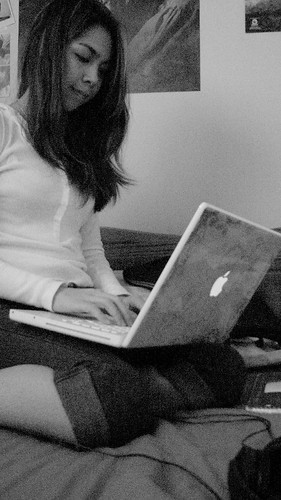
"Look at any ICT-enabled school classroom, and there is often a greater excitement for the technology with boys than girls, which by middle or secondary school, can translate into ICT tools being an exclusive domain of boys, excluding half the learning population from their benefit. How can technologists and educators design more gender neutral, or pro-female ICT-enabled learning experiences?"
This is the opening statement of the latest discussion on the UNESCO/InfoDev Education Technology Debate. Brooke Partridge (CEO of Vital Wave Consulting) and myself are the opinion contributors in this debate. Join in and contribute your thoughts!
Photo by Starbooze
eLearning Awards - win prizes for technology
 For the ninth consecutive year, European Schoolnet is organising the eLearning Awards, Europe's leading competition to reward excellence and best use of technology in education. Schools and teacher training institutions are invited to take part and register at http://elearningawards.eun.org to present their best projects making use of ICT for teaching and learning.
Subscribe to:
Posts (Atom)
